









No Prim logo, no pictogram. Just one single word: Spartak.
It is not an oversight. It is a tribute to the watches that were here before Prim.
When Prim did not yet exist
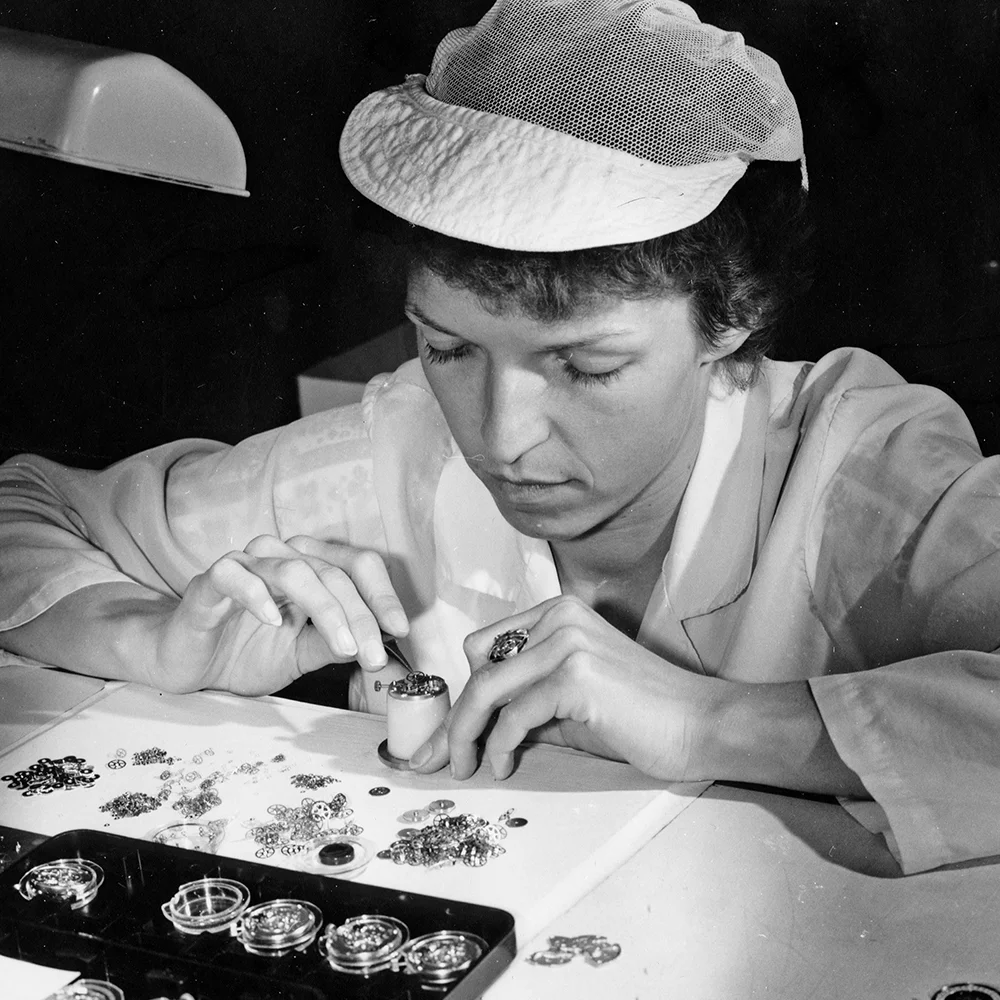
In November 1949, Chronotechna was founded in Nové Město nad Metují. It was based in the former district national committee and had a clear task: to introduce series production of wristwatches. With this, Czechoslovakia was to join the mere eight countries in the world that were capable of such a feat at the time.
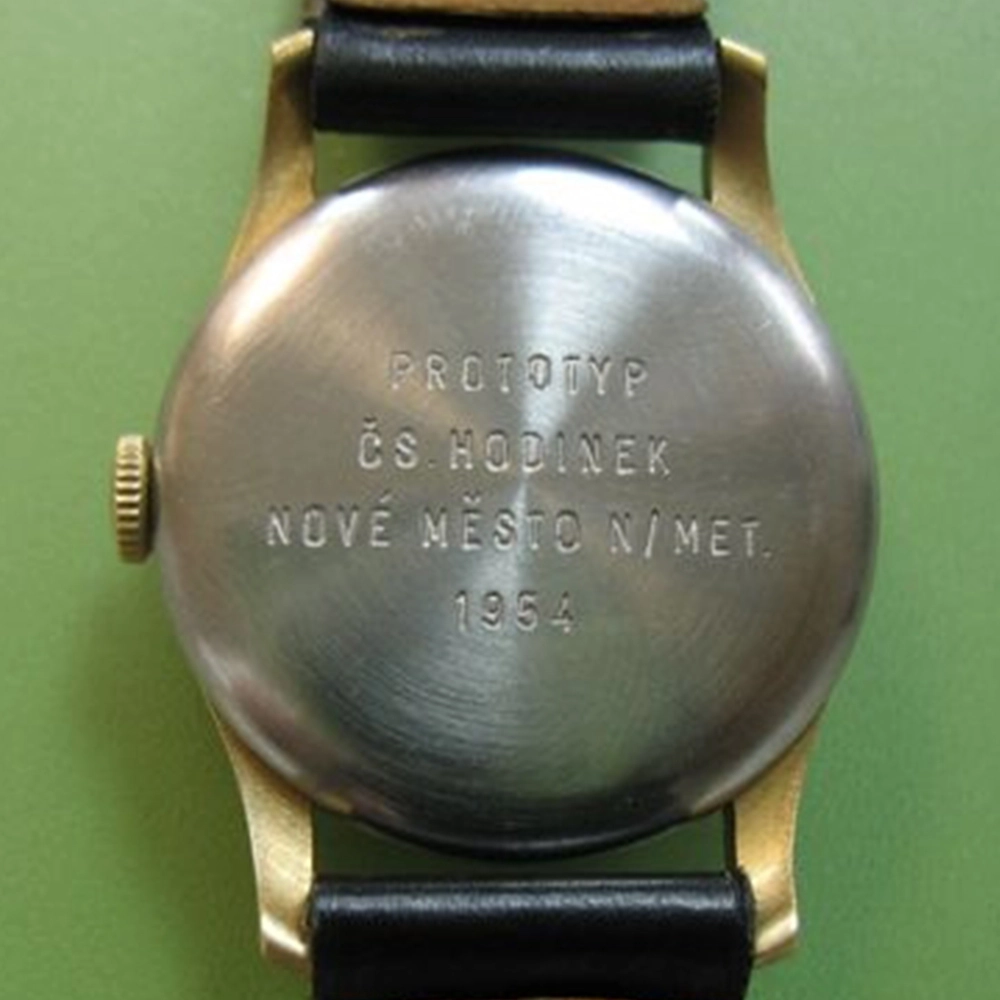
The French Lip calibre R25-3 movement served as the design template. Development work began in January 1953, and the complete drawing documentation was finished less than a year later. By the end of August 1954, twelve prototypes had been made. They needed a name.
The name Kotva (Anchor) was originally considered and had even been drawn on the movement assembly drawing. In June 1954, however, the plant director Josef Bena proposed a different name: Spartak. After the leader of the slave revolt in ancient Rome. In the context of the era, it was a name that fit.
And here is the key detail: the Prim brand did not exist for wristwatches at the time. In 1956 a competition was even held for the best name for the new Czechoslovak watch, and more than a thousand suggestions were submitted. Among the finalists were Nomesa, Novena, Metuna and Vesna. The management of Chronotechna in Nové Město, however, kept insisting on Spartak.
The final word came at the end of 1957. A ministerial commission decided that the watches would carry the same brand as the alarm clocks and wall clocks from the parent Chronotechna Šternberk. That is, Prim. For wristwatches, the brand was officially registered on 8 January 1958.
So Spartak was never a Prim. It was here first.
Over 1,600 pieces and the first owners
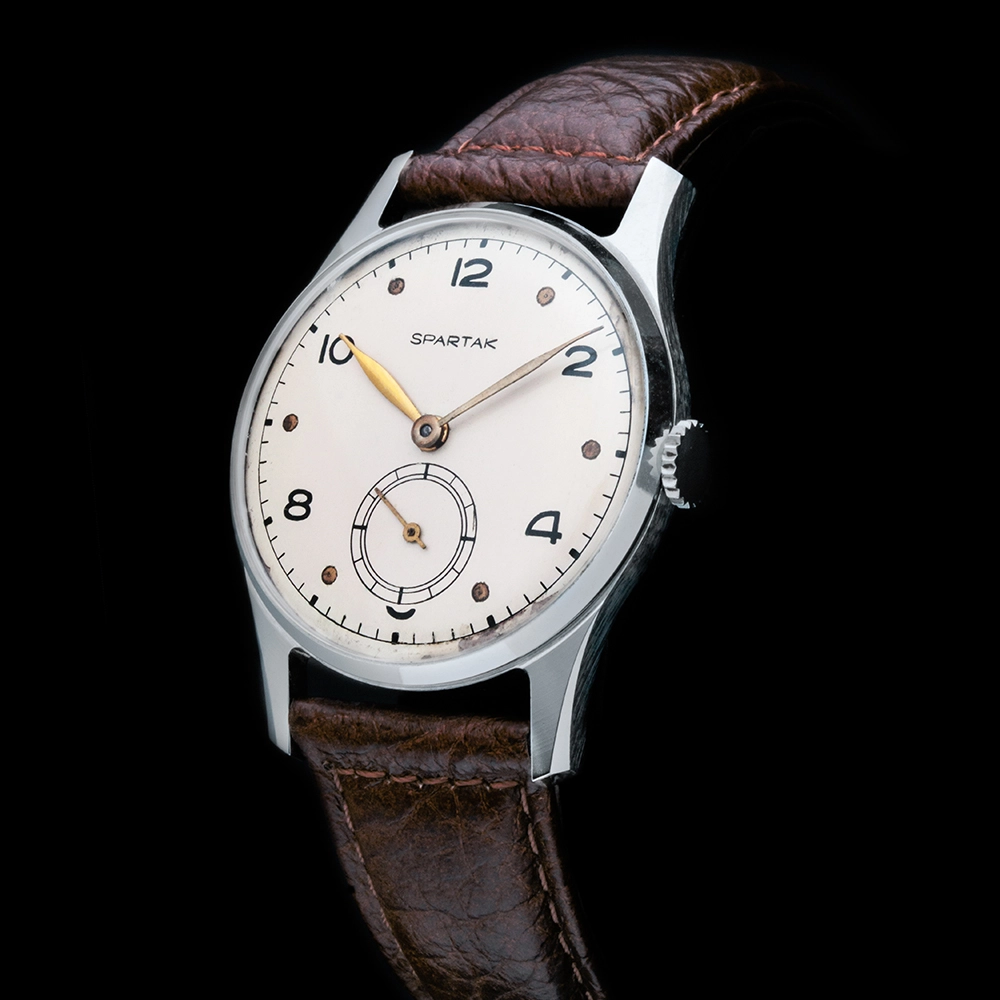
According to archive records, over 1,600 watches bearing the Spartak name were made. First twelve prototypes in 1954, then a sample series of 147 pieces and finally three verification series, each of five hundred pieces.
The first twelve prototypes went as gifts to the highest representatives of the party and the government. President Antonín Zápotocký received a piece with a gilded case and a white relief dial. Prime Minister Viliam Široký a piece with a black dial and white numerals. The rest went to so-called field tests. The watches were given to labourers, technicians, officials and even agricultural workers. They wore them for a whole year, keeping records of their accuracy, reliability and running time.
After a year they were supposed to return the watches. If they did not want to, they could buy them for 150 crowns, on the condition that they would not sell or give them to anyone for at least two years. At a time when watches were a scarce commodity, this was a very favourable price. The vast majority took up this option and kept the watches.
The first actual sale took place as early as autumn 1957. At the request of the Central Union of Consumer Cooperatives, five hundred pieces were put on sale on the occasion of the Engineering Fair in Brno. The official sale of Czechoslovak wristwatches, however, only got going on 1 April 1958. Already under the name Prim.
Why Spartak carries only its own name
When we introduce any Spartak into the collection today, we deliberately return to the moment when it all began. A dial without the Prim logo is not a stylistic choice or an aesthetic decision. It is intentional. In 1954, the identity was hidden inside, milled into the click wheel beneath the dial and stamped into the movement base as the serial number.
No other Prim watches have it this way. And they never will. There is only one Spartak.
Prim Spartak 43 LE – a tribute faithful to the original
We returned to the collection under a unified brand, and the first edition is Spartak 43 LE.
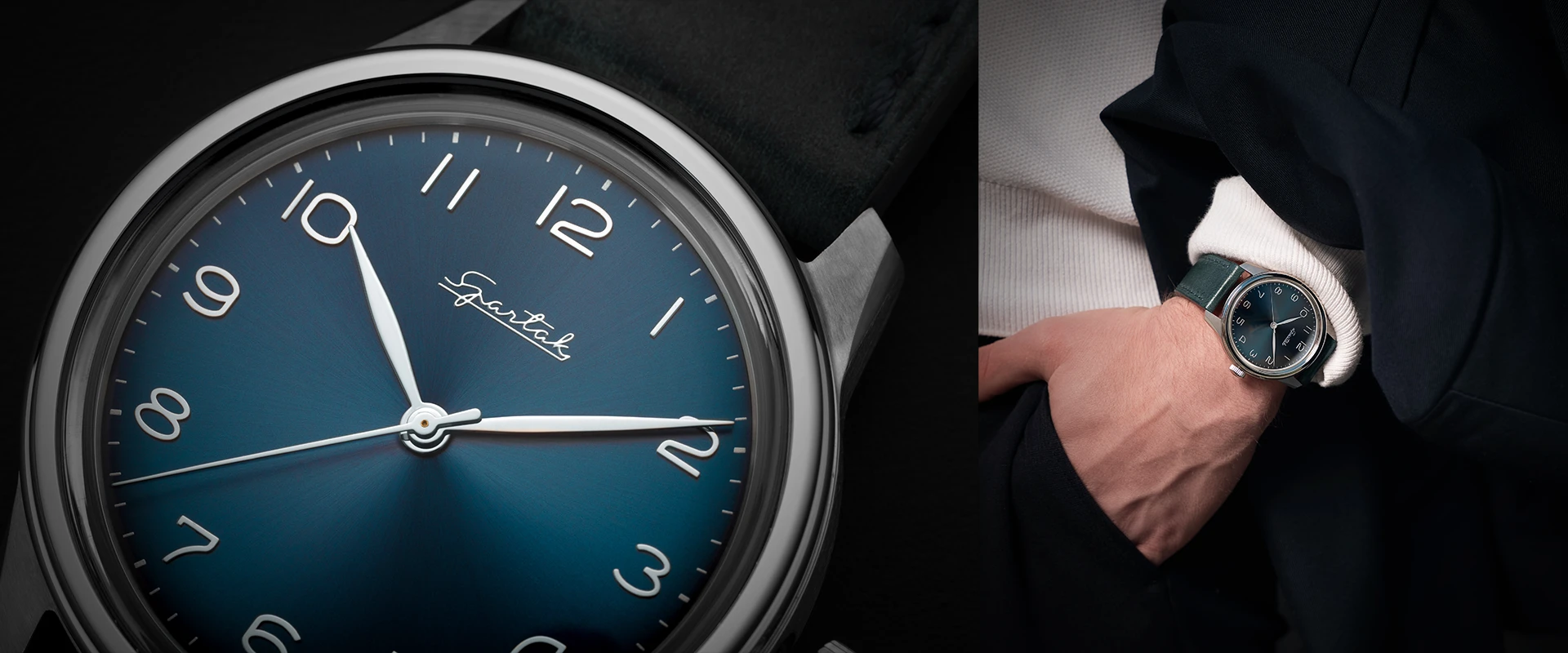
It is for those who want a representative echo of 1954. The 316L stainless steel case, 43 mm in diameter, combines polished and brushed surfaces with hand-polished bevels. The visual impression changes with every movement of the wrist. The relief dial with a sunburst effect is available in two variants, blue and silver.
Inside works the in-house calibre 98 movement from Nové Město nad Metují, with a power reserve of at least 48 hours. Screw-down crown, water resistance 100 m. Only 50 pieces of each colour variant will be made, with limited edition numbering.
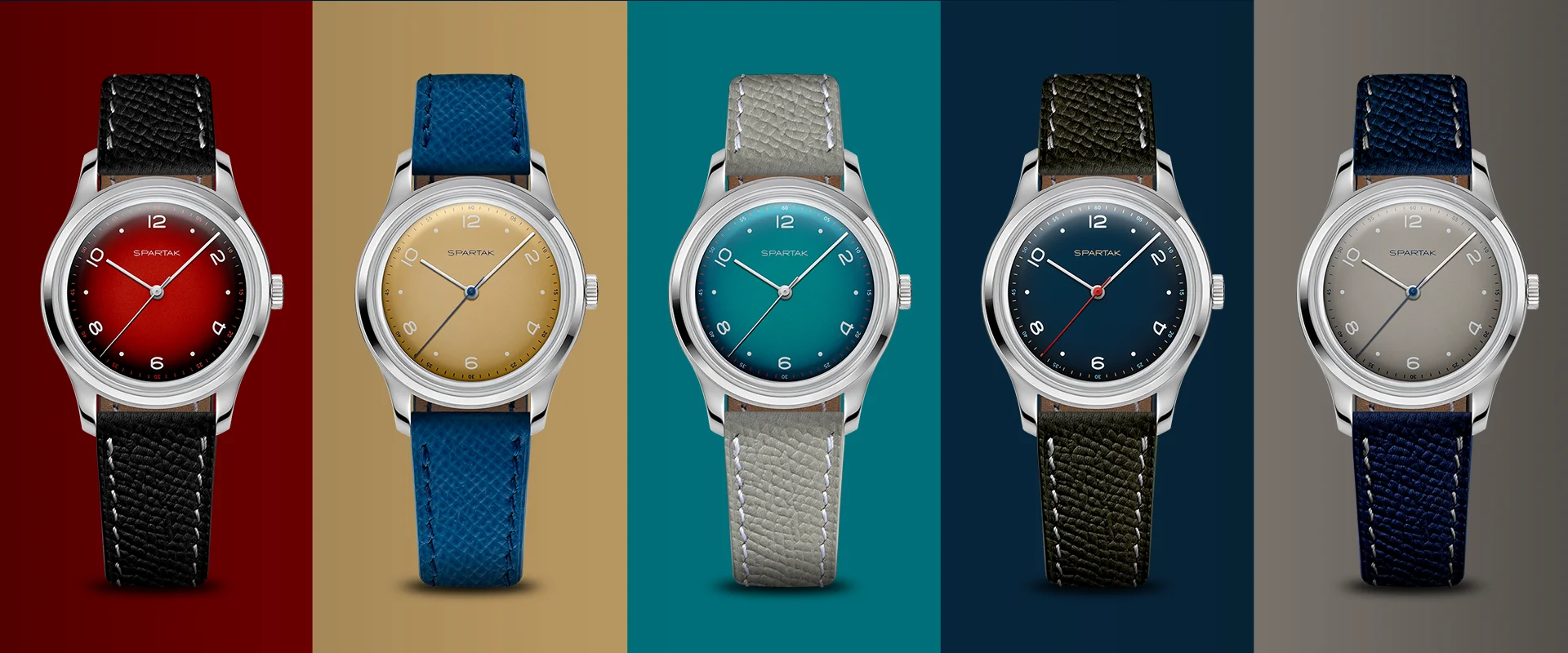
Prim Spartak 39 – the most colourful moment in the history of the iconic Prim watches
Ahead of summer 2026 comes the Spartak 39. And with it the most playful approach to colour that the iconic Prim watches have ever received.
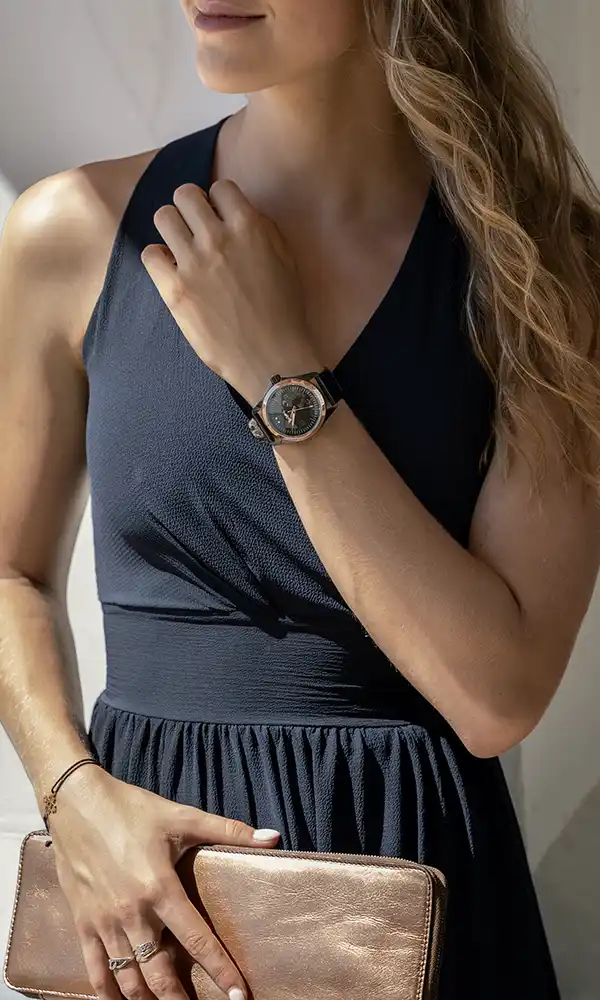
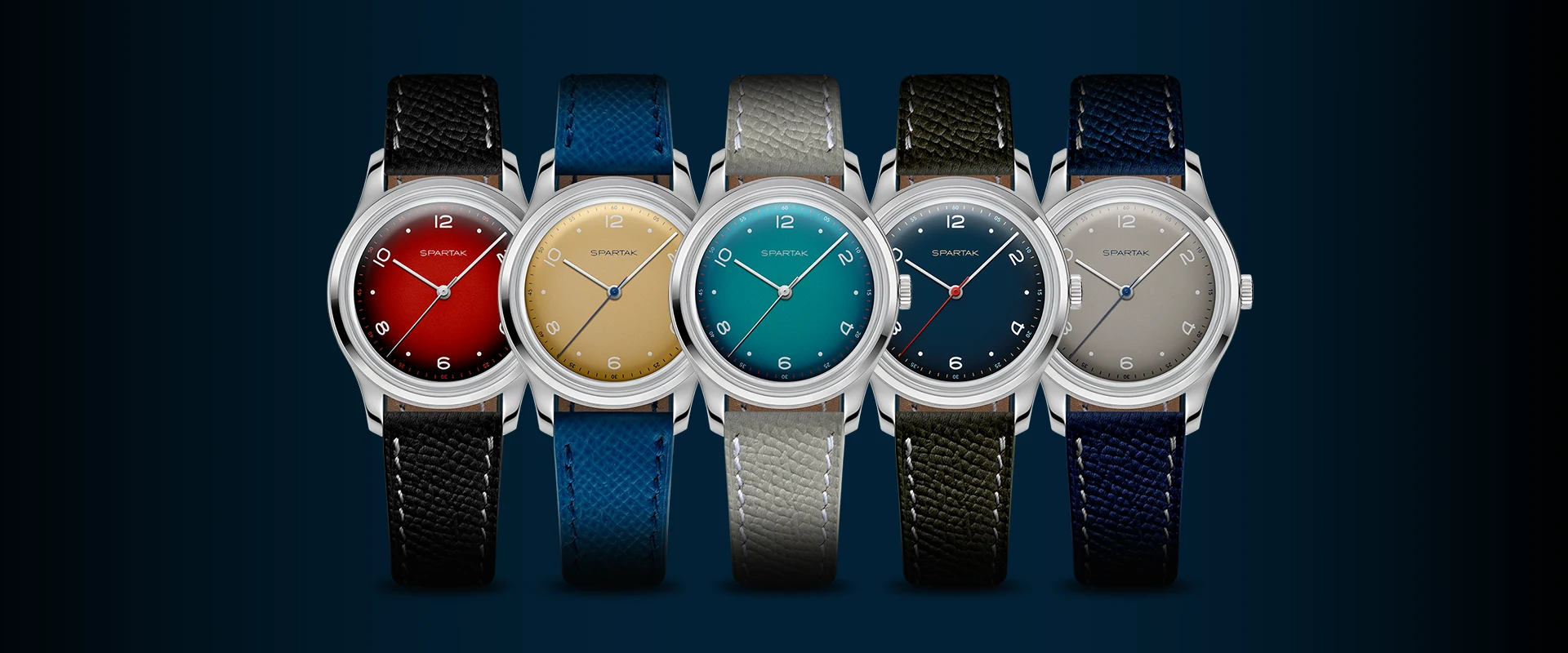
Prim Spartak 39 is for those who prefer a bolder statement. It keeps the foundation but opens it up to colour. It comes in five variants with a playful gradient dial: Moonlight, The calm before the storm, Lagoon, Sand Wind and Petrol.
None of the iconic Prim watches have ever received so many colours in a single edition. For the brand, it is the most colourful moment in its history. Instead of nostalgia, it brings the freedom to choose your own colour and mood.
A stainless steel case, 39 mm in diameter and 9.6 mm high. A sapphire crystal with an internal anti-reflective coating. Baton hands with Swiss Super-LumiNova luminescence. Inside works the automatic Swiss Sellita SW200-1 movement with a 42-hour reserve. Water resistance 50 m. Open edition.
And here too, just as with the 43 LE: only one inscription on the dial. Spartak.

A beginning that carries on
Spartak was first. It stood at the beginning of domestic watchmaking. It stood at the beginning of Prim. Today it stands at the beginning of a more diverse collection that passes its essence on. From the faithful tribute to 1954 in the 43 LE version to the five colours in the 39 version.
The beginning of more than 70 years of Prim’s history. A true milestone.
Spartak was first. And the dial will remind you of it with every glance.
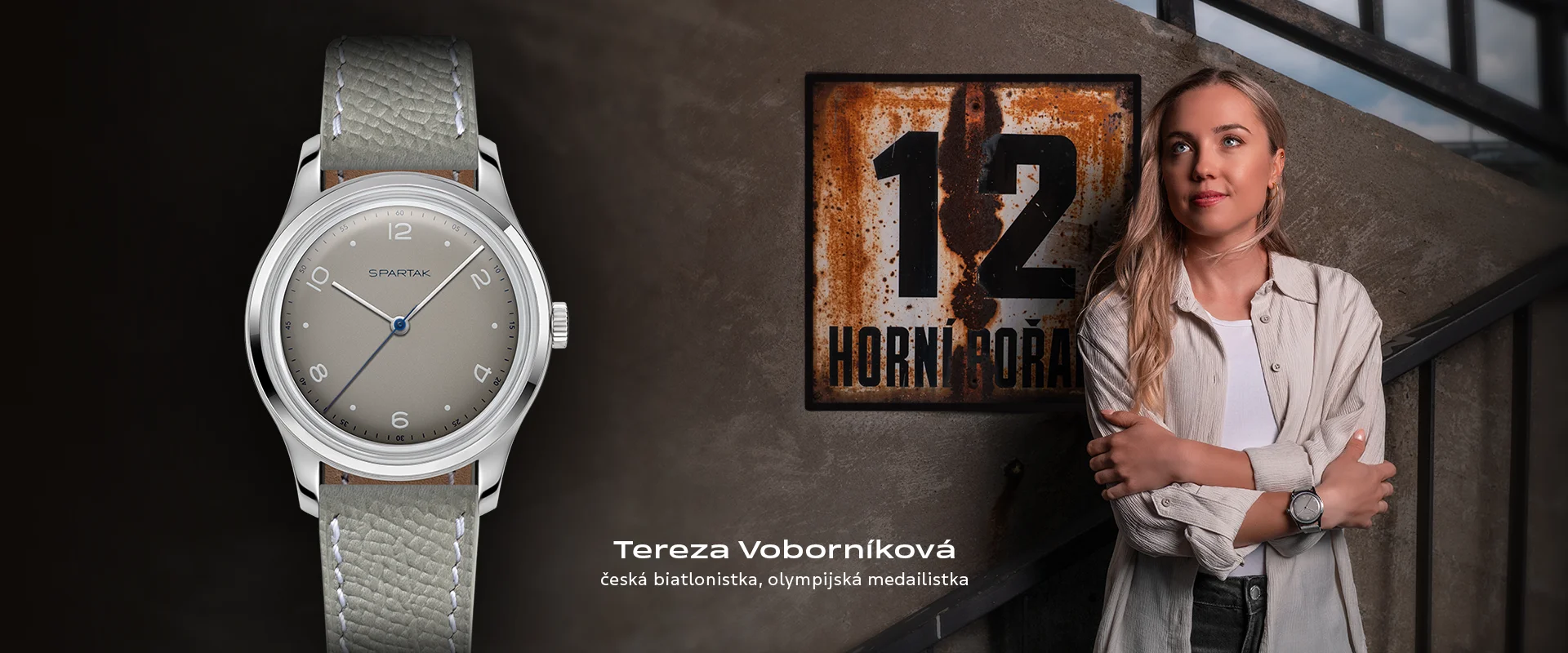
The first watch, the first big medal
Read the story of the face of the watches. The successful Czech biathlete and Prim ambassador Tereza Voborníková.